
Landscaping Equipment Financing: Mowers, Trucks, and Trailers Ready for the Season
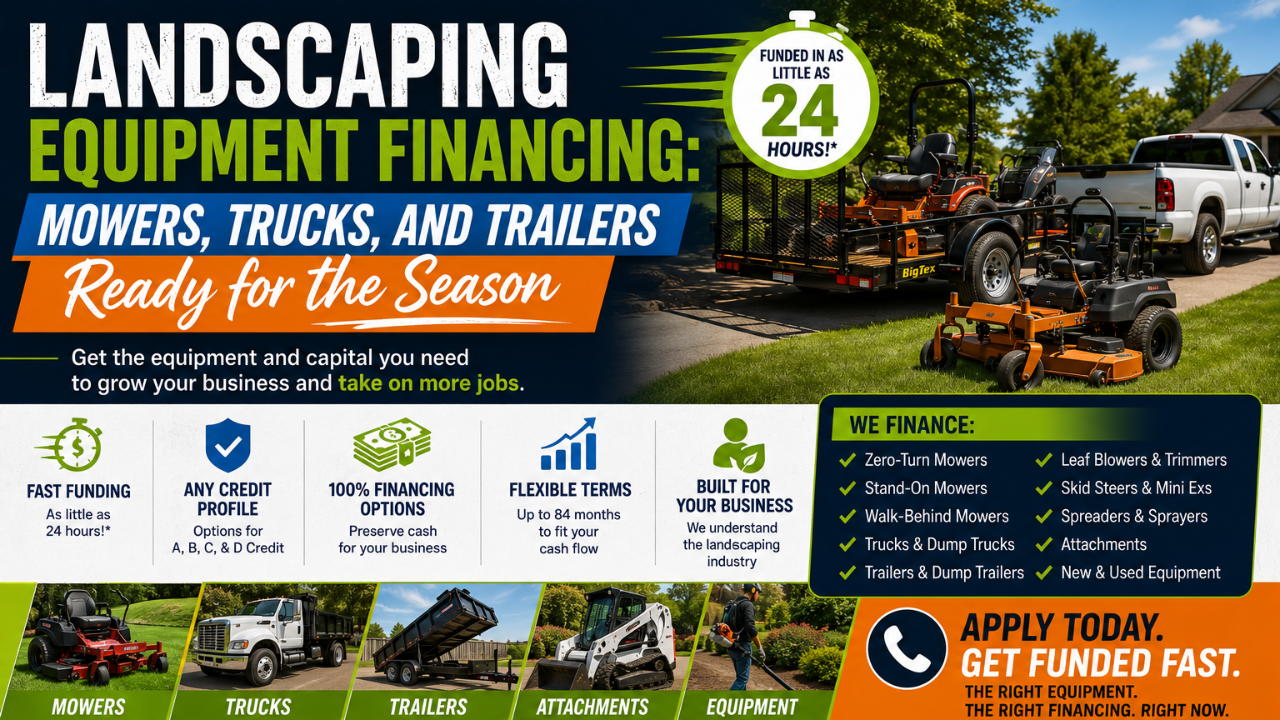
Your season is short. The window to add crews, add routes, and add revenue is measured in weeks, and it opens whether or not your equipment is ready.
Everlasting Capital finances landscaping and lawn care equipment — new and used, from a single zero-turn to a full crew package. Approvals often come back in hours. Funding can follow in as little as 24 hours.
Apply now at everlastingcapital.com/apply
What we finance in landscaping
- Mowers — zero-turns, stand-ons, walk-behinds, wide-area
- Trucks — pickups, dumps, flatbeds, chip trucks
- Trailers — enclosed, open, dump, equipment
- Compact equipment — skid steers, mini excavators, compact track loaders, stump grinders
- Tree care — chippers, bucket trucks, climbing gear, aerial lifts
- Hardscape — plate compactors, saws, mixers, block splitters
- Irrigation — trenchers, vibratory plows, pipe pullers
- Snow and ice — plows, spreaders, salt equipment, blowers
- Handhelds and attachments — trimmers, blowers, edgers, buckets, forks, grapples ...
Medical and Dental Equipment Financing: Chairs, Imaging, and Practice Build-Outs
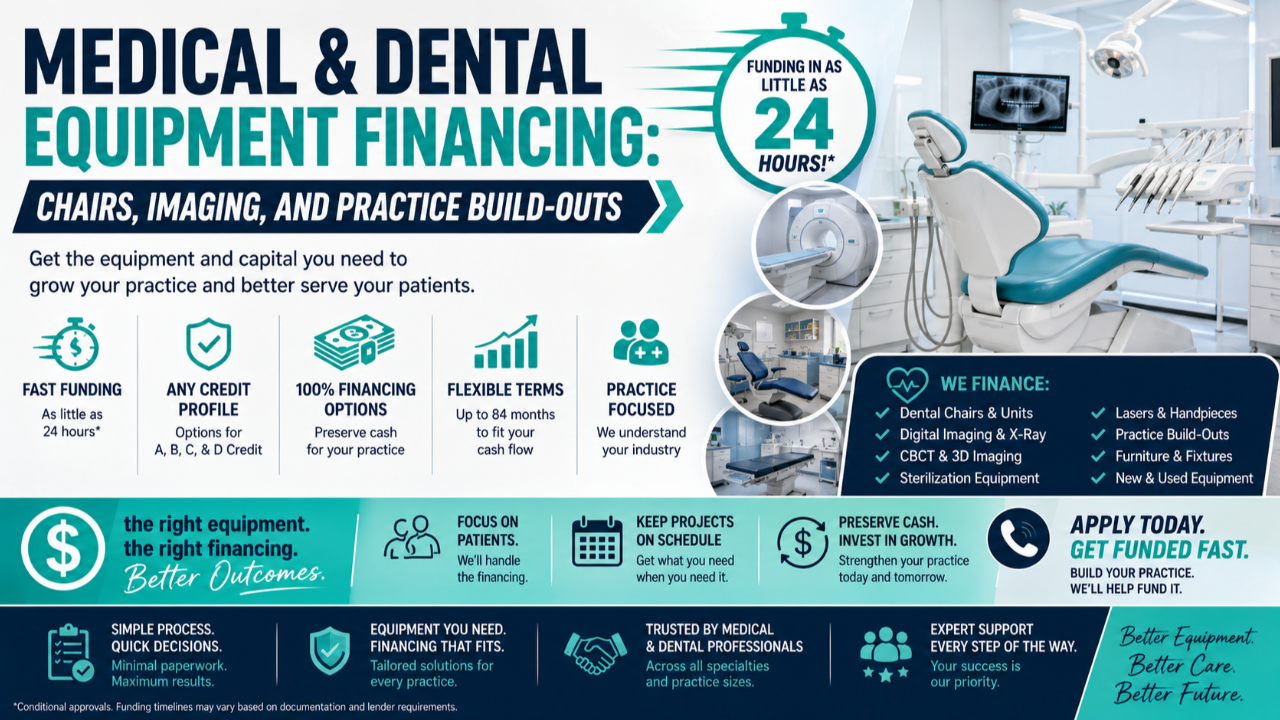
You went to school to practice medicine, not to negotiate with a bank about a CBCT scanner.
Everlasting Capital finances medical, dental, and veterinary equipment — new and used, from a single operatory to a complete practice build-out. Approvals often come back in hours. Funding can follow in as little as 24 hours.
Apply now at everlastingcapital.com/apply
What we finance in healthcare
Dental
- Operatory packages — chairs, delivery units, lights, stools
- Digital imaging — intraoral sensors, panoramic, CBCT / 3D cone beam
- CAD/CAM — mills, scanners, 3D printers, furnaces
- Sterilization — autoclaves, ultrasonic cleaners, handpiece maintenance
- Lasers, cavitrons, curing lights, compressors and vacuum systems
Medical
- Exam room equipment — tables, lights, diagnostics
- Imaging — ultrasound, X-ray, DEXA, C-arm
- Aesthetics and dermatology — lasers, IPL, body contouring, RF microneedling
- Lab and diagnostic analyzers
- Physical therapy and rehab equipment
- Surgical and procedure ro ...
Restaurant Equipment Financing: Kitchens, Build-Outs, and Refrigeration Funded in as Little as 24 Hours
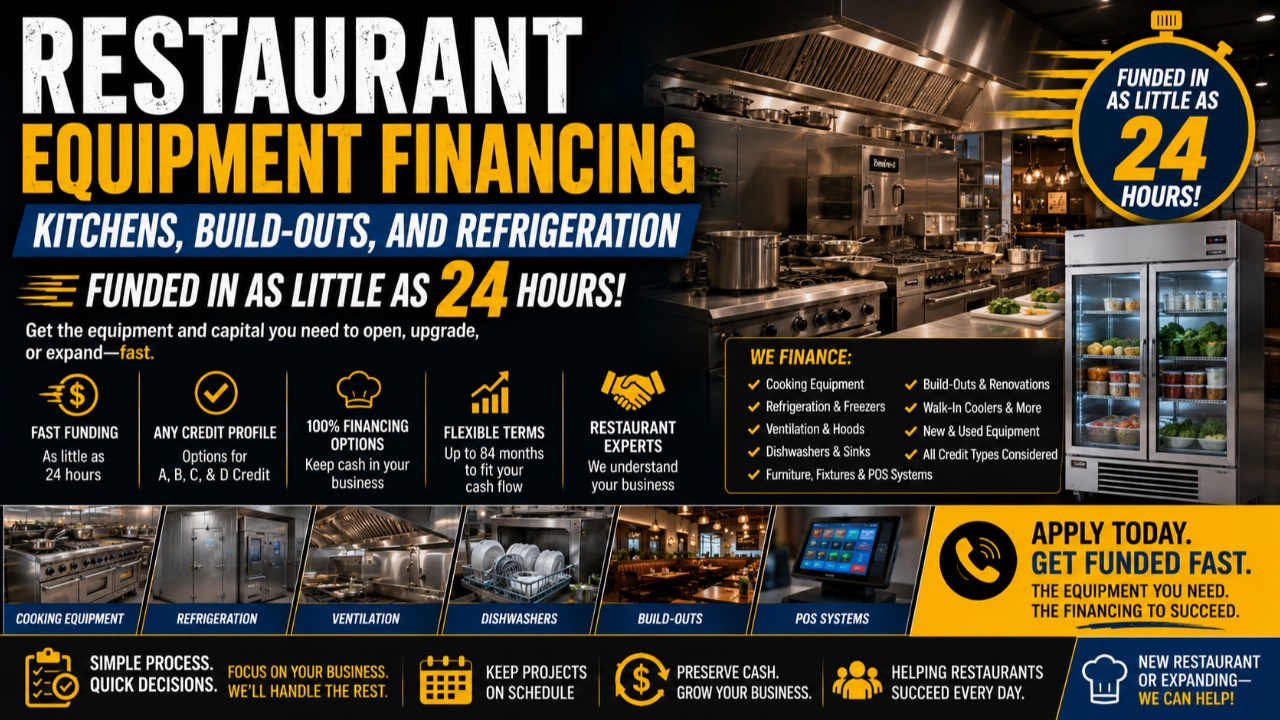
The walk-in fails on a Friday. The hood system doesn't pass inspection. The space you signed is perfect and completely empty.
Restaurants run on thin margins and hard deadlines, and the equipment is the business. Everlasting Capital finances kitchens — new and used, from a single reach-in to a complete build-out. Approvals often come back in hours. Funding can follow in as little as 24 hours.
Apply now at everlastingcapital.com/apply
What we finance in food service
- Cooking line — ranges, ovens, combi ovens, fryers, griddles, charbroilers, salamanders
- Refrigeration — walk-in coolers and freezers, reach-ins, prep tables, undercounters, blast chillers
- Ventilation — hoods, make-up air, fire suppression
- Warewashing — dish machines, three-compartment sinks, boosters
- Prep equipment — mixers, slicers, food processors, vacuum sealers
- Bar and beverage — draft systems, ice machines, espresso machines, glass washers, back bar coolers
- Front of house — POS systems, KDS, tables, chairs, ...
Construction Equipment Financing: Excavators, Skid Steers, and Fleet Additions Funded Fast
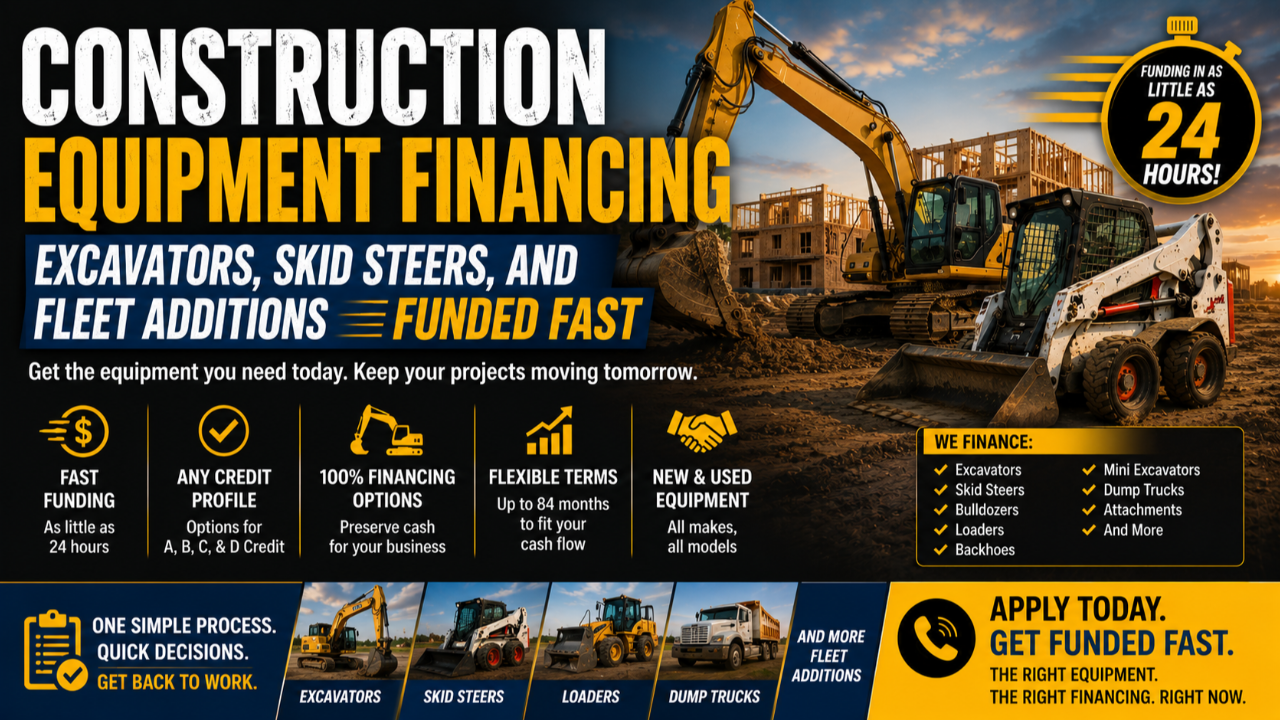
The bid is due Friday. The job starts in three weeks. You need a machine you don't own yet.
Everlasting Capital finances construction equipment — new and used, from a single skid steer to a full fleet addition. Approvals often come back in hours. Funding can follow in as little as 24 hours, which is usually faster than the equipment can get to your yard.
Apply now at everlastingcapital.com/apply
What we finance in construction
- Excavators — mini through full-size
- Skid steers, track loaders, and compact track loaders
- Dozers, graders, and scrapers
- Backhoes and wheel loaders
- Dump trucks, water trucks, and flatbeds
- Trailers — equipment, lowboy, dump
- Cranes, boom lifts, scissor lifts, and telehandlers
- Compaction equipment — rollers, plate compactors, rammers
- Concrete equipment — mixers, pumps, saws, power trowels, forms
- Attachments — buckets, breakers, augers, grapples, mulching heads
- Generators, light towers, and compressors
- Surveying, GPS, and machine control systems
Trucking Equipment Financing: Trucks, Trailers, and Reefers Funded in as Little as 24 Hours
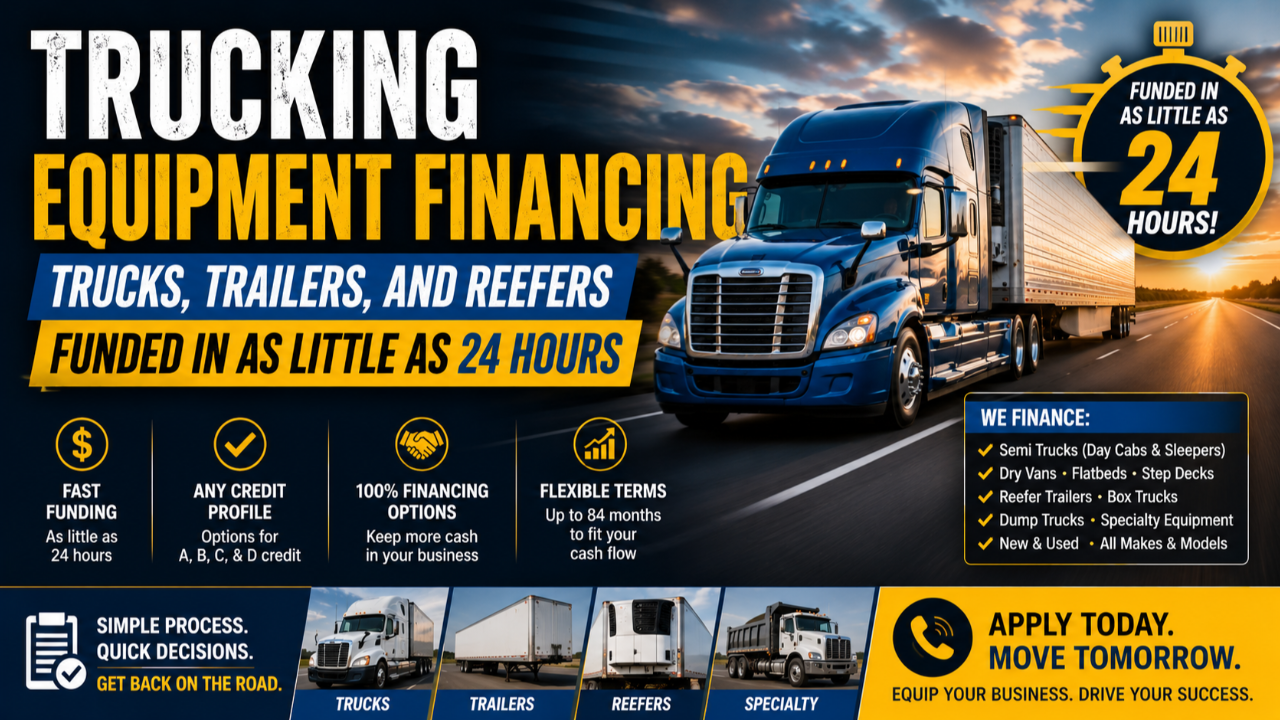
Freight doesn't wait. A truck goes down on Tuesday and the loads you booked for next week go to whoever has a tractor available.
Everlasting Capital finances trucks, trailers, and everything you bolt to them — new and used, for owner-operators running one truck and fleets running fifty. Approvals often come back in hours. Funding can follow in as little as 24 hours.
Apply now at everlastingcapital.com/apply
What we finance in trucking
- Class 8 sleepers and day cabs — new and used
- 2- and 3-axle tractors for regional and local operations
- Dry vans, flatbeds, and step decks
- Reefer units and refrigerated trailers
- Tankers, dumps, and specialty trailers
- Box trucks, straight trucks, and sprinter vans
- Tow and recovery equipment
- APUs, liftgates, ELDs, and telematics
- Shop equipment — lifts, diagnostics, tire machines
- Rebuilds and major component replacement — engines, transmissions, DPF systems
Amounts from $1,000 to $2,000,000. If it moves freight or keeps freight moving, brin...
Equipment Financing vs. Leasing vs. Line of Credit vs. Working Capital vs. Business-Use HELOC: Which One Is Right for You?
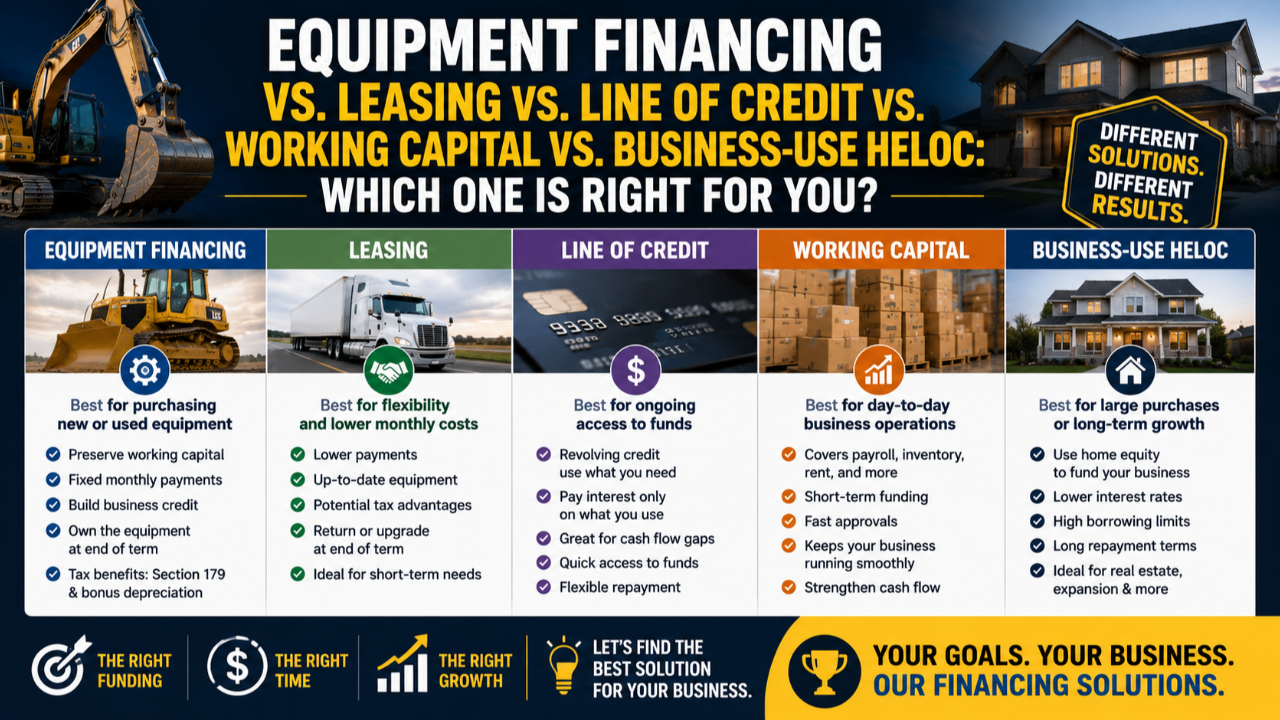
There's never been more capital available to small businesses than there is right now. Equipment financing, leasing, lines of credit, working capital, home equity — five strong products, each built to do something specific exceptionally well.
The good news is that you don't have to pick the "best" one. You just have to pick the one that matches what you're doing. Here's how they line up.
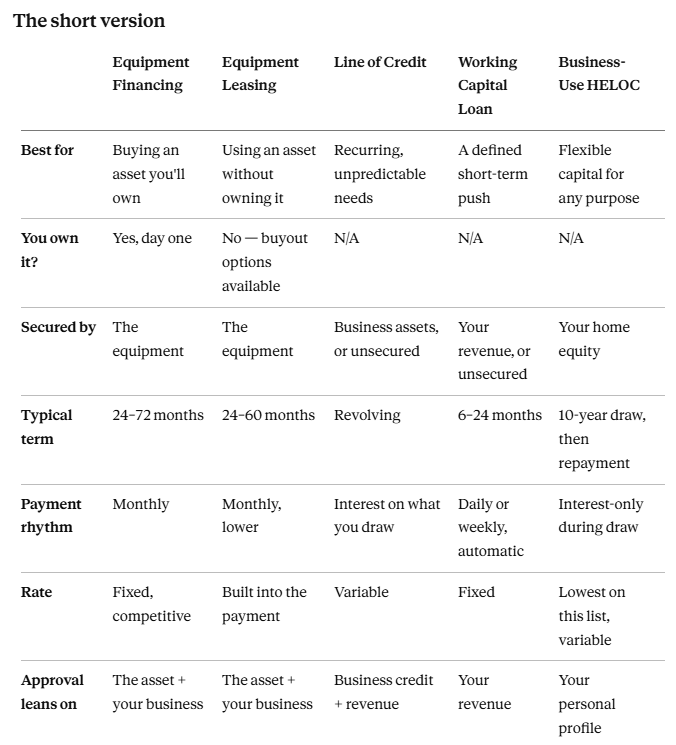
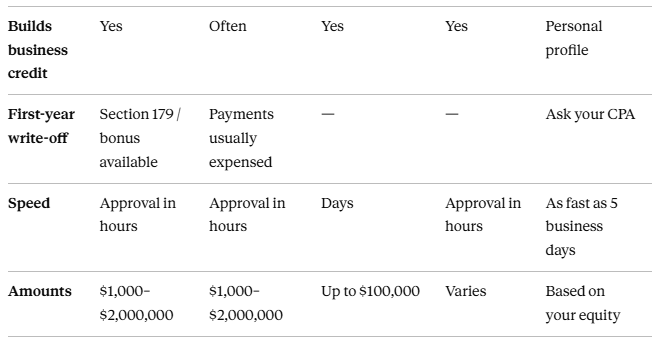
Equipment financing
The workhorse. You're buying an asset and you want to own it.
You take the loan, the equipment secures it, and you own it from day one — building equity with every payment. Terms run up to 60 months, and because the asset itself carries the deal, underwriting looks at the equipment as much as at you. That's why equipment financing opens doors that stay closed elsewhere.
Then there's the tax lever, which is genuinely powerful: you can deduct the full purchase price in year one under Section 179 and 100% bonus depreciation — even though you financed it. Put a little down, ded...
New vs. Used Equipment Financing: What Actually Changes (and What Doesn't)
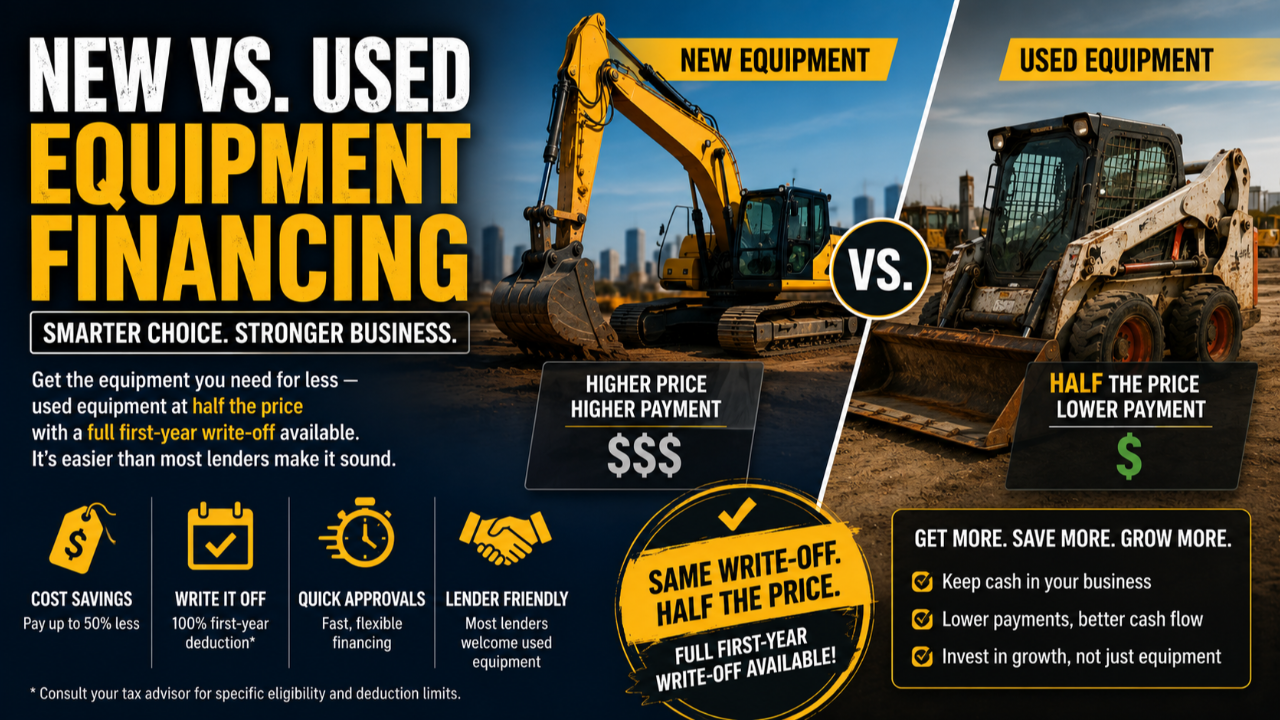
There's a belief among business owners that used equipment is hard to finance. That lenders want shiny things, that a machine with hours on it is a problem, that if you want financing you'd better be buying new.
It's mostly wrong. And it's expensive to believe, because used equipment is frequently the better buy — a low-hour used excavator can run 40–60% of the cost of new, and it will do the same work.
Here's what actually changes when you finance used, what doesn't, and how to tell which one is right for your situation.
Start with what doesn't change: the tax treatment
This is the part that surprises people most, so let's put it up front.
Used equipment qualifies for the full first-year write-off. Both Section 179 and 100% bonus depreciation apply to pre-owned assets. The requirement for bonus depreciation isn't that the equipment is factory-new — it's that it's new to your business. First use by you, not first use ever.
So a five-year-old machine you buy at auction for $180,...
Why Banks Keep Saying No — and Where the Money Actually Is

You put together the package. Two years of returns, the P&L, the bank statements, the projections. You sat across from someone who nodded a lot. Then you waited three weeks and got a letter with one paragraph in it.
No explanation you could actually use. No counteroffer. Just no.
Here's what almost nobody tells you in that moment: it probably wasn't about you.
The numbers say this is structural
The Federal Reserve surveys tens of thousands of small businesses every year about their financing experiences. The 2025 Small Business Credit Survey, released in 2026, is the clearest picture available of what's actually happening — and it's not a picture of a market where good businesses get funded and bad ones don't.
Of the small businesses that applied for financing:
- 42% received the full amount they asked for.
- 22% received nothing at all.
- The rest got partial funding — approved, but not for what they needed.
For context on how far the ground has shifted: in 2019, roughly 62% ...
Section 179 and 100% Bonus Depreciation in 2026: Finance the Equipment Now, Deduct It This Year
Here's the part most business owners don't realize until their accountant tells them in March, when it's too late to do anything about it:
You can finance a piece of equipment, put a fraction of its cost down, and still deduct the entire purchase price this year.
Not the down payment. Not this year's payments. The whole thing.
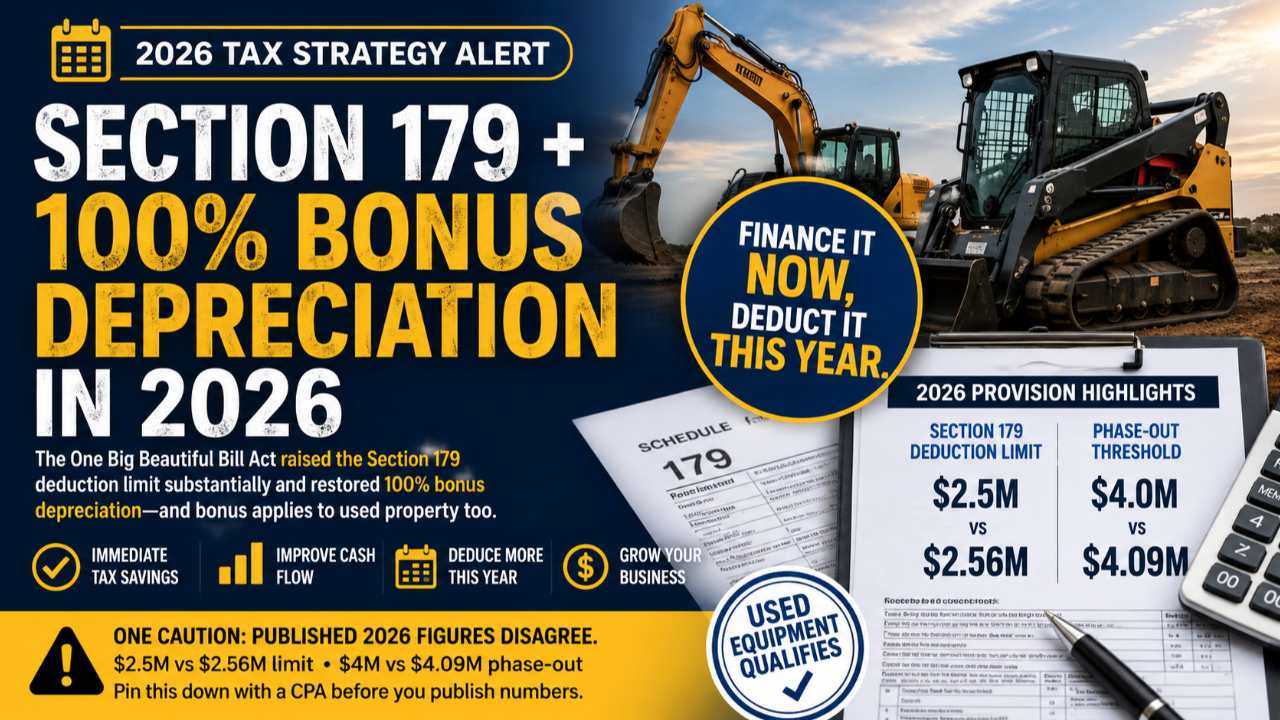
That's not a loophole. It's how Section 179 and bonus depreciation have worked for years, and in 2026 the numbers are the most generous they've ever been. The only real constraint is the calendar — and the calendar is not on your side after about mid-November.
The 2026 numbers
The One Big Beautiful Bill Act, signed in July 2025, made two changes that matter enormously to anyone buying equipment:
Section 179 expensing. OBBBA raised the maximum deduction from $1 million to $2.5 million and the phase-out threshold from $2.5 million to $4 million — permanently, and indexed to inflation. After the IRS inflation adjustment in Rev. Proc. 2025-32, the 2026 figure...
Your Business Needs the Equipment. Here's How to Pay for It.

Every growing business hits the same wall eventually. A contract comes through that requires a second truck. A machine that's held the shop together for fifteen years finally quits. A competitor down the road upgrades their line and suddenly your turnaround time looks slow.
The equipment isn't optional. But writing a check for it? That's a different conversation — one that usually ends with a hard look at the bank balance and a decision to wait.
Waiting has a cost. Equipment financing exists so you don't have to pay it.
What equipment financing actually does
Equipment financing lets you acquire the asset now and pay for it over time, using the equipment itself as the collateral. Instead of draining working capital or maxing out a bank line of credit on a single purchase, you convert a large one-time cost into predictable monthly payments — payments the equipment is presumably helping you earn.
That last point matters more than people give it credit for. A machine that generates ...
